super class i occlusion
Also known as prognathism this class of malocclusion occurs when the lower front teeth are more prominent than the upper front teeth and the patient has a large lower jaw or a short upper one. This study assessed the relative stability of the sagitt.

Chart Of Open Mouth Showing Teeth Google Search Tooth Chart Teeth Diagram Teething Chart
Excelsior SL-10Excelsior 1018 Microcatheter.

. Attainment of a Class I molar relationship Angle is often a prime treatment objective. Moreover a functional mandibular forward deviation was observed and the anterior positioned condyle in the glenoid fossa was apparent. Distocclusion retrognathism overjet overbite In this situation the mesiobuccal cusp of the upper first molar is not aligned with the mesiobuccal groove of the lower first molarInstead it is anterior to it.
Am J Orthod 197262296309Andrews six keys to occlusion1Molar relationship. Class I Class I with a tendency to II Class I with a tendency to III Class II Division I Class II Division II and Class III. The mesiobuccal cusp of the upper first molar occludes with the buccal groove of the lower first molar.
This is also known as the standard of occlusion and what we try to achieve. These constants will be referred to as the six. Inter-class occlusion prior to parse scenes and refine pixel-level labels.
A mild class 2 occlusionEnd to endcan be. Class 2 Device Recall SUPER COMPLIANT 7MM X 15MM. Jim Leathley Regulatory Affairs Manager Phone.
AJO-DO 1972 Sep 296-309. Class I occlusion is also known as. Super Class I Malocclusions When the mesiobuccal cusp tip of the upper fi rst molar occludes distally to the buccal groove of the lower fi rst molar in a position between Class I and full Class III the malocclusion is termed Super Class I Fig.
The mesiobuccal cusp of the maxillary first molar occluding posterior to the buccal groove of the mandibular first molar ie. There are two subtypes of Class II malocclusion. A definition of the optimal occlusion in the permanent dentition as defined by Lawrence F.
In order to better understand types of occlusion its been broken down into three categories. In addition to considerations of improved function and skeletodental harmonies a Class I relationship often is deemed the correct and stable situation. They also reveals bilateral asymmetries severity of malocclusion for example.
Submitter Name and Stryker Neurovascular Address. Occlusion is defined as making contact with the surface of an opposing tooth when the jaws are closed. This article will discuss six significant characteristics observed in a study of 120 casts of nonorthodontic patients with normal occlusion.
The six keys to normal occlusion. Stryker Neurovascular Microcatheters are intended to assist in the delivery of diagnostic agents such as contrast media and therapeutic agents such as occlusion coils into the peripheral coronary and neurovasculature. 47900 Bayside Parkway Fremont CA.
The six keys to normal occlusion - Andrews The six keys to normal occlusion Lawrence F. The molar relationship was overcorrected to a super Class I on the left side and Class I on the right side. The three classes according to Angles classification are as follows.
Class 1 Class 2 and Class 3. Click to see full answer Similarly what is class II occlusion. Success with this treatment result depends upon slight over-correction of the buccal segments molars and canines to a super Class I which builds anchorage into the.
The overall treatment time was 24 months ie 12 months of functional appliance wear and 12 months of fixed appliance treatment. I11 January 2013JA 1123. This causes the teeth to be misaligned and the lower incisors can touch the gingival tissue of the upper arch of the jaw.
And those between class I and class III are called super I malocclusion notation S1. Class I pseudo-Class I super Class I. The distal surface of the.
Andrews in 1972They have significant clinical implications for routine orthodontic therapyFurther ReadingAndrews L. Mesiobuccal cusp of maxillary 1st molar is directly in line in mesiobuccal groove of md. The mesio-facial cusp of the maxillary 1st molar occludes with the mesio.
-there may be crowding spacing and local irregularities secondary to early loss developmental anomalies which are the most common. Usually the mesiobuccal cusp rests in between the first mandibular molars and second premolars. Distally positioned when in occlusion with the mesiobuccal cusp of the maxillary first molar.
What is the molar relationship of a Class I Occlusion. Management of distal occlusion with functional appliances can lead to improvement in oro facial function through muscle adaptation along with dental and skeletal changes. Class II Malocclusion Class II Malocclusion Class II Malocclusion has two divisions to describe the position of the anterior teeth.
Angles classification This help clinician to better describe the occlusion. A Class 3 molar relationship is described as. The mesiobuccal cusp of the upper first molar occludes anterior to the buccal groove of the lower first molar.
This is noted as NORMAL occlusion. TransFormTM Occlusion Balloon Catheter Compliant and Super Compliant Common Name. Class I malocclusions Class I malocclusions include -those anomalies where the anteroposterior relationship of lower and upper arches is within normal limits -there may be transverse andor vertical malrelationships.
Normal Occlusion - For a normal occlusion the mesio-buccal cusp of the maxillary first molar is aligned with the buccal groove of the mandibular first molar. The patient showed a full-cusp Class II right side and a half-cusp Class II left side molar relationship with a large overjet 160 mm and congenital loss of two mandibular incisors. Same as normal occlusion but characterized by crowding rotations and other positional irregularities.
Class II Division 1 is when the maxillary anterior teeth are proclined and a large overjet is present. OFNet designed by Lu et al22 considers the relevance between occlusion contours and pixel orien-tations but no semantic information is included. Class 1 - Class 1 malocclusion involves normal molar relationship as seen in Normal Occlusion but.
Same as normal occlusion but characterized by crowding rotations and other positional irregularities. The maxillary first molar is severely posteriorly positioned relative to the mandibular first molar. Each class can also become more specific by being.
Which is it and why is it important. Trained from bounding box super-vision only. A Super Class I malocclusion is a mild version of Class III mal-.
Class I malocclusion. Teeth are aligned in Cusp Fossa relationship with their antagonist teeth. For patients who have an anterior crossbite associated with a forward anteroposterior shift a slightly super Class I molar occlusion in centric occlusion before treatment is most desirable because correction of the anterior crossbite would eliminate the shift and tend to alter the molar occlusion to Class I.
Classification Of Malocclusion Certified Fixed Orthodontic Courses

Startrader Class Super Freighter Super Class Startrader Space Spaceship Design 3d Model Model

Must Know Classifications Of Dental Caries For The National Dental Hygiene Boards Dental Caries Dental Hygiene Student Dental Hygiene School

Pin On Tooth Be Told
2

Dental Ergonomics How To Access Patient S Teeth In The Different Quadrants Clock Posi Dental Cosmetic Dentistry Dental Hygiene Student Dental Assistant Study

Black Drip Bottom Teeth Grillz In 2022 Bottom Teeth Grillz Grillz Brass Metal

Pin By Jamie Ryan Duval On Funny Dentist Dental Childrens Dentistry Dentistry For Kids

Maxillary Alveolar Fracture Fracture Dental Humor Dental Problems

Dentistry Clock Positions Dental Hygiene Student Dental Hygiene School Dental Assistant Study

Orthodontics Dental Hygiene School Orthodontist Marketing

Pin By Jenni Clarke On Dental Assistant Life Registered Dental Hygienist Dentistry Dental Fun

Orthodontics Dental Hygiene School Orthodontist Marketing

Spaceship Bismarck Super Dreadnought 3d Model 3d Model Low Poly 3d Models Albedo

Pin On Dental Health

Dental Charting Symbols World Of Template Format Throughout Dental Charting Symbols24166 Dental Charting Dental Hygiene Student Dental Hygiene School
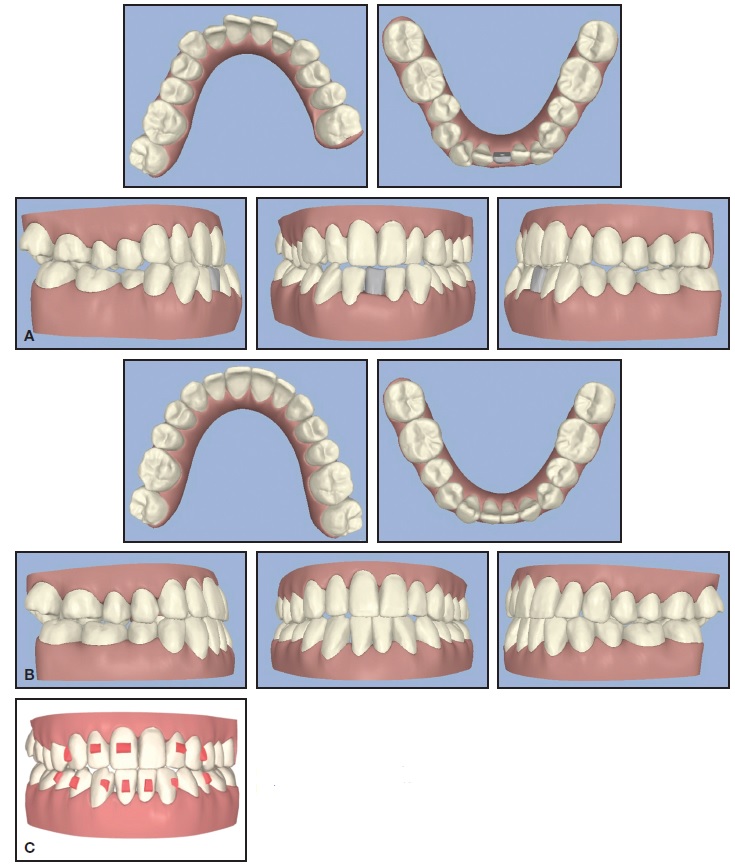
Invisalign Treatment Of Class Iii Malocclusion With Lower Incisor Extraction Jco Online Journal Of Clinical Orthodontics

Creative Dental Scholar On Twitter Dental Hygiene Student Dental Hygiene School Dental Fun
2